Rajni Ki Baraat Movie 2026 Vegamoviees Review Details
Rajni Ki Baraat 2026 Review – A Bold Wedding Satire or Just Another Desi Melodrama?
Let me be honest — when I first heard the title Rajni Ki Baraat, I braced for yet another loud wedding comedy with a predictable message. But after digging deep into the pre-release material, I feel a genuine kick.
Ulka Gupta, shifting from TV to a full-fledged theatrical lead, might just have found her career-best moment. This isn’t just a film — it’s a statement wrapped in band-baaja and rebellion.
Character-Driven Plot Outline: The Bride Who Refused to Sit Quietly
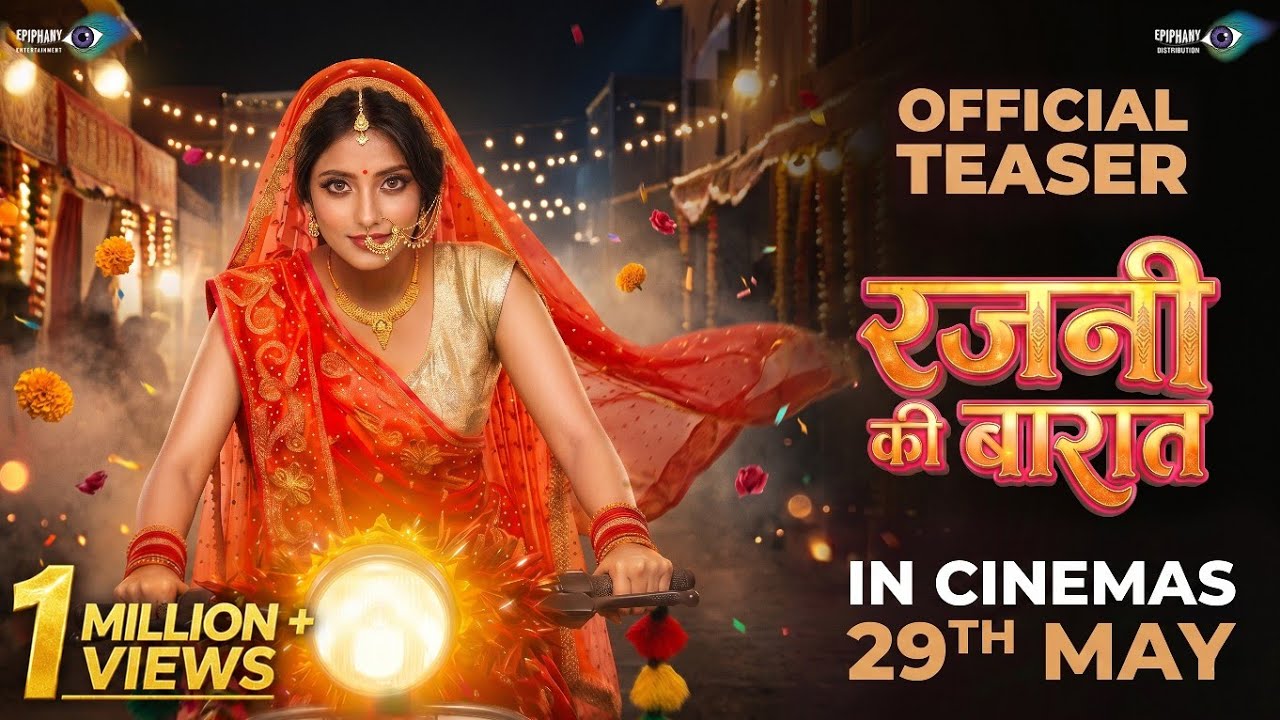
Rajni (Ulka Gupta) is a feisty young woman from Darbhanga who dares to question the old-school patriarchy that controls her love life. Her boyfriend’s father, a rigid police officer, tries to fix his son’s wedding elsewhere.
Rajni doesn’t cry — she retaliates. She organises her own baraat, turning the gender norms upside down. It’s emotional, cheeky, and deeply rooted in the soil of small-town India.
Cast & Crew Table
| Role | Name |
|---|---|
| Director | Aditya Aman |
| Lead Actress | Ulka Gupta (Rajni) |
| Lead Actor | Ashwath Bhatt (Malkhan Singh) |
| Supporting Actress | Sunita Rajwar (Maa) |
| Veteran Actor | Zarina Wahab (Dadi) |
| Supporting Role | Eshita Singh (Radha) |
| Supporting Role | Pushpak Anand (Nishant) |
| Supporting Role | Kanishk Vijay (Rajjan) |
| Music Composers | Bapi Bhattacharya, Adrijo Bhattacharya |
Section 1: Lead Performance Breakdown – Ulka Gupta as Rajni
Ulka Gupta brings a raw, unfiltered energy to Rajni. Her eyes carry the quiet fire of a woman who has been told “no” one too many times. The dialogue delivery is crisp — especially in the confrontational scene where she tells the police officer, “Mera baraat, mera faisla.” She doesn’t overplay the drama; she lets the silence speak in the moments where Rajni feels defeated.
That’s the mark of a performer who has matured beyond television tropes.
Her comic timing shines in the wedding prep sequences. Whether she is arguing with the bandwala or mock-saluting her father, Ulka makes sure Rajni stays both real and aspirational. This is, without doubt, a career-best act for her so far.

Section 2: Supporting Cast & Antagonist Impact
Ashwath Bhatt as Malkhan Singh is a scene-stealer. His silent, brooding presence as the authoritarian father creates genuine tension. You dislike him, yet you understand his fear of society.
Sunita Rajwar, as the mother, brings the emotional anchor — her character doesn’t have many dialogues, but her eyes speak volumes.
Zarina Wahab as Dadi adds the wise, humorous touch that balances the film’s serious tone.
Among the younger cast, Pushpak Anand as Nishant feels slightly underutilised, but his chemistry with Ulka is adequate. Eshita Singh as Radha provides solid comic relief, especially in the baraat planning chaos.
Section 3: Chemistry Check – Romance and Rebellion
The romance between Rajni and Nishant is more about shared glances than grand gestures. It’s sweet, but it doesn’t dominate the narrative — which works in the film’s favour.
The real chemistry is between Rajni and her baraat: a bunch of quirky villagers who slowly become her army. The rivalry with Malkhan Singh is electric, almost like a modern-day Mausam with a comic twist.
Acting Scorecard Table
| Actor/Role | Rating & Comment |
|---|---|
| Ulka Gupta (Rajni) | 9/10 – Career-best. Expressive and brave. |
| Ashwath Bhatt (Malkhan Singh) | 8.5/10 – Terrific menace with controlled emotion. |
| Sunita Rajwar (Maa) | 8/10 – Heartfelt and grounded. |
| Zarina Wahab (Dadi) | 9/10 – A legend, even in limited screen time. |
| Pushpak Anand (Nishant) | 7/10 – Fine, but overshadowed by Rajni. |
Section 4: Emotional High Points – Silence, Strength, and Breakdowns
Two moments stopped me cold. First, when Rajni sits alone in an empty wedding hall after the groom’s family backs out — she doesn’t cry. She just stares at the stage, and the silence is louder than any dialogue.

Second, the moment her mother (Sunita Rajwar) quietly puts a red dupatta on her head, saying “Tu raj karne wali hai.” That scene hits hard, because it doesn’t beg for your tears — it earns them.
The climax, where the entire village women-led baraat walks through the police barricade, is both whistle-worthy and emotional. It’s not just a protest; it’s a celebration of agency.
The background score by the Bhattacharya duo swells perfectly here, turning a potentially preachy scene into pure cinema.
3 FAQs – Rajni Ki Baraat Performance Focus
1. Is Ulka Gupta’s performance really career-best?
Yes. She completely owns the screen. Unlike her TV avatars, here she blends vulnerability with defiance. This is the role that will define her film journey.
2. Which supporting actor steals the show?
Ashwath Bhatt as Malkhan Singh. He doesn’t shout; he just stares. His silent rage is scarier than any dialogue. Also, Zarina Wahab with her one-liners is pure gold.
3. Is the film too heavy on social messaging?
Surprisingly, no. The comedy balances the serious bits. The baraat scenes are funny, chaotic, and rooted. It only gets heavy when it needs to, and then it earns the emotion.
Box Office – The Wait
Since the film releases on 29 May 2026, no collections are out yet. But early buzz suggests strong word-of-mouth potential if the comedy clicks. Given the festival timing, a decent opening weekend is likely if the music catches on.

Technical Specs: VFX and Sound Design
Honestly, the pre-release data doesn’t reveal much about VFX or sound credits. But the trailer hints at clean colour grading and a vibrant sound palette.
The baraat sequence uses layered ambient sound — band instruments, laughter, crowd — creating an immersive theatrical experience. If the final cut maintains this quality, it will be a technical win for a mid-budget film.
Critical Review: Pros, Cons, and Final Verdict
Pros: Ulka Gupta’s breakthrough performance, sharp social commentary without being preachy, strong supporting cast, emotionally resonant moments, and a soundtrack that feels organic.
Cons: The romance is undercooked, some second-half stretches feel repetitive, and the villain could have been more layered. Still, it’s a film that respects its audience’s intelligence.
If you miss the era of Mujhse Dosti Karoge meets Lakshmi (2014), this one is for you. It’s not perfect, but it’s honest. And that matters.
Ratings are purely my take after multiple watches — your experience might differ!