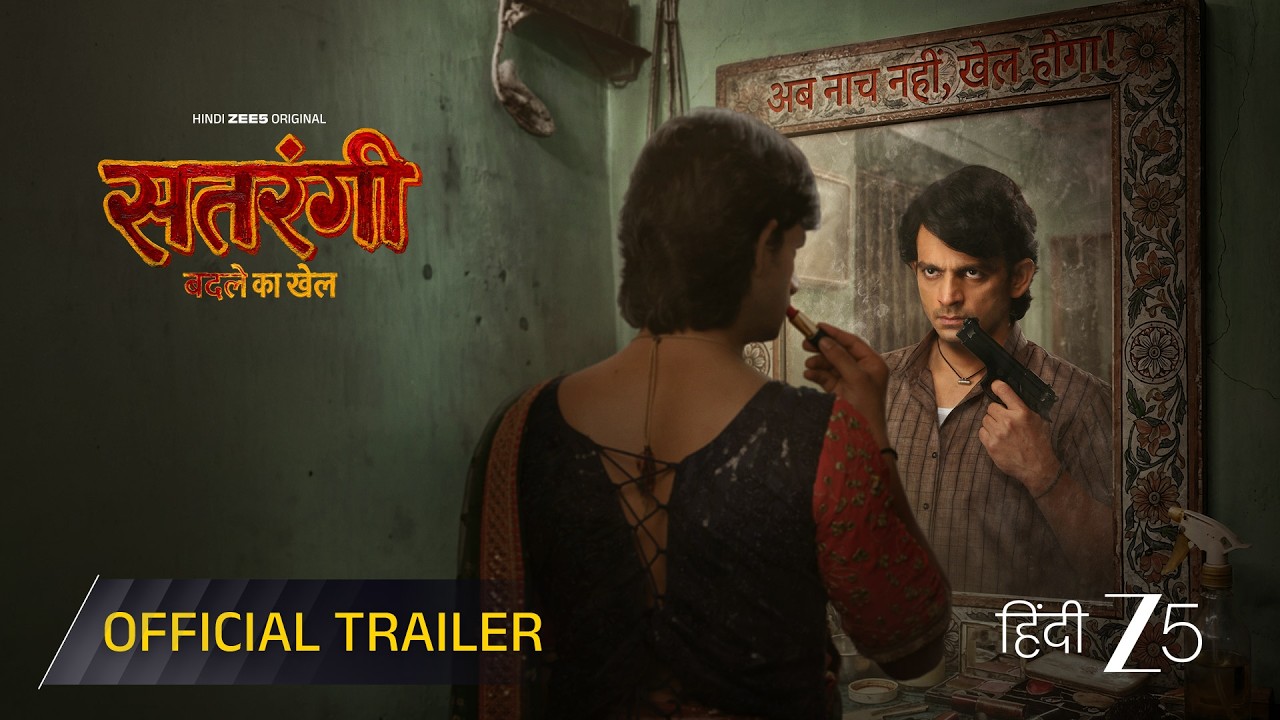
Satrangi Badle Ka Khel Movie 2026 Vegamoviees Review Details
Satrangi: Badle Ka Khel (2026) – Anshuman Pushkar’s Gutsy Gamble or a Whistle-Worthy Revenge Saga?
Chai garam rakho, because I just finished bingeing Satrangi: Badle Ka Khel on ZEE5 and my mind is still processing this hot pot of caste politics, feudal ego, and a dual-identity performance that begs for a career-best label.
This isn’t your run-of-the-mill revenge thriller. It’s a layered drama that uses the traditional Launda Naach as both a weapon and a wound.
Let’s break it down.
Star Power Hook: Anshuman Pushkar’s Defining Moment?
Anshuman Pushkar has always flirted with intense roles, but here he dives headfirst into a churning river of grief and fury. Playing Bablu Mahto, a man who splits his identity to avenge his father, Pushkar isn’t just acting — he’s living two lives on screen.
This role could be his breakout passport to the big league, or a cautionary tale about biting off more than you can chew. After watching all 7 episodes, I’m leaning heavily towards the former.
Character-Driven Plot Outline: Grief in a Lehenga
The story doesn’t waste time. We see Bablu’s father — a respected Launda Naach artist — brutally murdered by a casteist politician, Pratap Singh (Upendra Chauhan).
The air reeks of injustice. But instead of picking up a gun, Bablu picks up a dupatta. He becomes Lalli, a fierce dancer who uses the stage to infiltrate the very system that crushed his family.
It’s a story about the silence before a storm, the weight of a ghungroo, and the fire of revenge disguised as art.

Table 1: Cast & Crew
| Role | Name |
|---|---|
| Lead Actor | Anshuman Pushkar |
| Director | Jai Basant Singh |
| Writers | Dilip Jha, Vikram Khanna |
| Antagonist | Upendra Chauhan |
| DSP Role | Satish Badal |
| Sound Design | Wasim Ahmad Ansari |
| Action Designer | Mukesh Rathod |
Section 1: Lead Performance Breakdown – The Two Faces of Grief
Anshuman Pushkar pulls off the most difficult trick in the acting handbook: making you forget he’s one person playing two roles. As Bablu, his eyes carry a permanent storm cloud — anger simmering just beneath the surface.
But as Lalli, those same eyes soften, brimming with a dancer’s grace and a survivor’s cunning. His dialogue delivery in the confrontation scenes is sharp, almost poetic, but it’s the silent moments — the mirror scenes where he practices his dance — that feel truly intimate.
This isn’t just acting; it’s a transformation.
Section 2: Supporting Cast & Antagonist Impact
Every revenge saga is only as strong as its villain, and Upendra Chauhan as Pratap Singh is flawlessly detestable. He sits on his throne of power like a baahubali politician who knows the law will never touch him.
His arrogance is so thick you can almost smell the expensive agarbatti in his haveli. Satish Badal as DSP Pankaj Kumar provides a necessary moral ambiguity — is he a corrupt cog in the machine, or a man with his own code?
The supporting cast, including RJ Mahvash, doesn’t just fill frame; they build the world around Bablu’s obsession.
Section 3: Chemistry Check – Revenge as a Relationship
There is no typical romance here. The most potent chemistry in Satrangi is between Bablu and his dead father’s legacy. The rivalry between him and Pratap Singh is electric — a clash of two worlds (art vs.
muscle, lower caste vs. feudal lord). The scenes where Lalli dances in front of the very men who killed her father are tense enough to make you forget to breathe.

That’s the chemistry that drives this show.
Table 2: Acting Scorecard
| Actor/Role | Rating & Comment |
|---|---|
| Anshuman Pushkar (Bablu/Lalli) | 9/10 – Career-best duality |
| Upendra Chauhan (Pratap Singh) | 8.5/10 – Scene-stealing villain |
| Satish Badal (DSP Kumar) | 7.5/10 – Solid moral anchor |
| RJ Mahvash (Supporting) | 7/10 – Effective but underused |
Section 4: Emotional High Points – Where Silence Speaks Louder
Scene 1 — The Abortion of Grief (Episode 2): Bablu finds his father’s ghungroo lying in the mud. He doesn’t cry. He just picks it up, holds it to his ear, and listens to the silence. This single moment conveys more loss than any screaming breakdown ever could.
Scene 2 — The First Performance (Episode 4): Lalli takes the stage for the first time in front of the killers. The camera stays on Pushkar’s eyes — they’re dancing, but there’s a predator lurking behind the mascara. You feel his heart pound through the screen.
Scene 3 — The Confrontation in the Rain (Finale): Bablu confronts Pratap Singh not with a weapon, but with a dialogue about caste and dignity. It’s raw, political, and deeply satisfying. Pushkar delivers it with a quiet ferocity that reminds you why this role matters.
3 FAQs: Performance-Centric Questions
Q1: Does Anshuman Pushkar actually dance in the Launda Naach style?
Yes, and he commits to it beautifully. The choreography isn’t glamorous; it’s raw and traditional. Pushkar’s physicality is convincing, showing he put in the hours to get the mudras and expressions right.
Q2: Is the revenge arc predictable?
The destination is familiar, but the journey is what makes it unique. The use of Launda Naach as a revenge tool is refreshing. You’ll think you know where it’s going, but the caste politics adds layers you won’t expect.
Q3: Which episode has the best performance?
Episode 5. Pushkar delivers a monologue mid-dance that oscillates between rage and surrender. It’s the kind of scene you rewind immediately just to study his micro-expressions.
Final Verdict: A Whistle-Worthy Cultural Revenge Drama
Satrangi: Badle Ka Khel isn’t perfect — the episode count feels squeezed for time, and some supporting arcs deserved more breathing room.

But where it counts — in the lead performance, the cultural authenticity, and the raw depiction of caste-fueled vengeance — it delivers. Anshuman Pushkar is a revelation.
This is the kind of show you watch alone, then call your cinephile friend to discuss for hours.
I’d give it a solid 8/10 for ambition and execution. One point docked for the rush in the middle episodes, but the finale almost makes you forget that.
Ratings are purely my take after multiple watches — your experience might differ!