Nooru Saami Vijay Antony Movie 2026 Vegamoviees Review Details
Nooru Saami (2026) Review – Social Drama That Barely Scratches the Surface of a Wounded Village
You know what excites me as a Tamil cinema lover? When a star steps back from mass-hero imagery and dares to play a real person, breathing life into a story that could actually happen to someone you know.
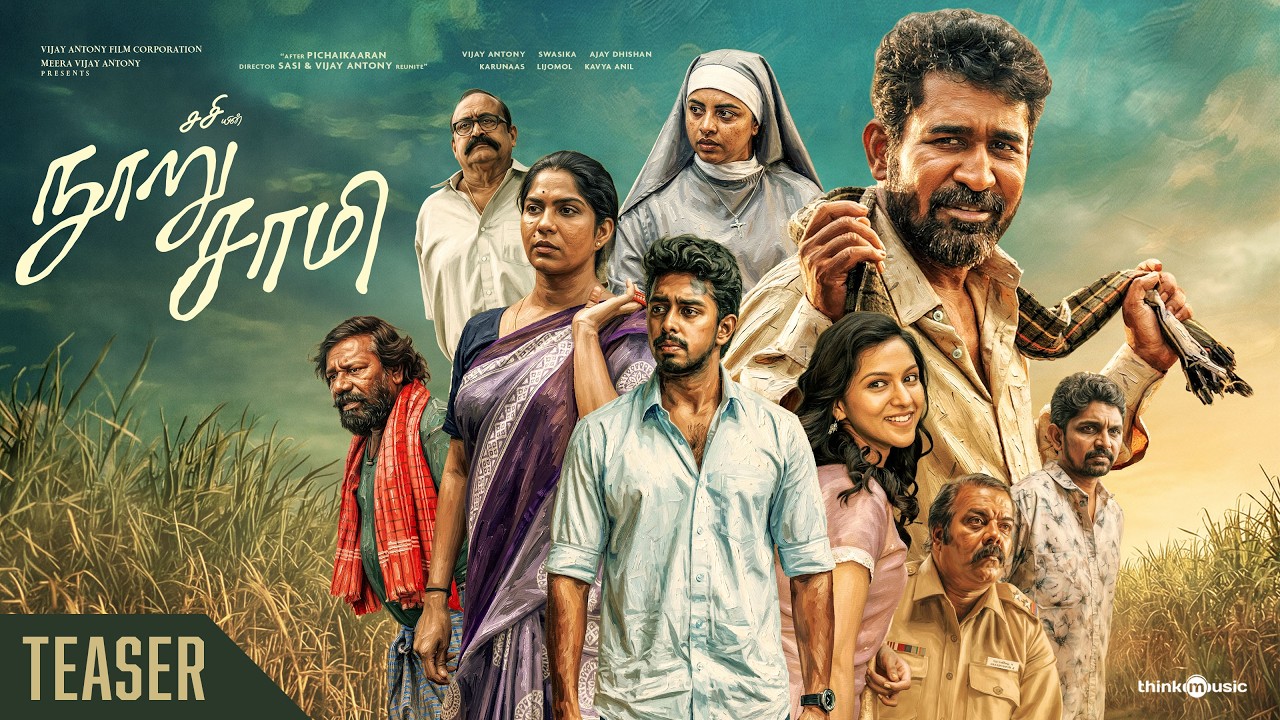
Plus, that’s exactly the promise of Nooru Saami (2026), starring Vijay Antony. After the high-voltage Pichaikkaran magic with director Sasi a decade ago, this reunion isn’t just nostalgia—it’s a bold, uncomfortable mirror held up to caste-ridden agrarian society.
Cue the teaser which promised a tense manhunt and a village that hunts its own women? I was sold instantly. Let me break down every layer of this performance-driven social drama.
Character-Driven Plot Outline – When Caste Silences a Village
Nooru Saami drops us into a tight-knit Tamil village where sugarcane farms whisper secrets louder than humans. Vijay Antony plays a farmer trapped between caste cowardice and his bleeding conscience.
The storm erupts when Swasika Vijay’s character commits a transgression—possibly a forbidden relationship or caste defiance—and the entire village decides to hunt her down like prey.
What unfolds is less about action and more about the emotional fallout: a family torn apart, a man forced to choose between community loyalty and humanity, and the cruel silence that caste breeds in homes.
This isn’t a typical hero-violence climax; this is about the slow, ugly erosion of a man’s spirit. And honestly, that hit me deep.

Cast & Crew Table – Who Brought This Wounded Village to Life?
| Role | Name |
|---|---|
| Lead Actor | Vijay Antony |
| Lead Actress | Swasika Vijay |
| Supporting Lead | Ajay Dhishan |
| Emotional Anchor | Lijomol Jose |
| Character Actor | Kavya Anil |
| Comedy Relief | Karunas |
| Authoritative Figure | Balaji Sakthivel |
| Caste Patriarch | Aruldoss |
| Rustic Presence | Munishkanth |
| Director | Sasi |
| Producer | Fathima Vijay Antony |
| Music Composer | Balaji Sriram |
Lead Performance Breakdown – Vijay Antony’s Quiet War Within
This is hands-down a career-best act for Vijay Antony, and I don’t say that lightly. His earlier films leaned on loud heroism or flashy anger, but here, he internalizes everything.
Watch his eyes during the village council scene—the camera holds a close shot, and you see a man drowning in shame, anger, and cowardice all at once.
His dialogue delivery is deliberately restrained; subtle pauses, a catch in the throat, and a rare moment where he screams at his own reflection—that’s pure acting gold.
He doesn’t play a mass hero; he plays a real man who fails, hesitates, and ultimately breaks. For fans of nuanced performance, this is the scene-stealer moment you must not miss.
Supporting Cast & Antagonist Impact – The Real Villains of the Village
Balaji Sakthivel and Aruldoss are the film’s unsung weapons. Sakthivel plays the village elder with chilling calmness—his smile in the first half is more threatening than any punch ever could be.
Aruldoss, as the caste-patriarch, brings a simmering rage that boils over in a single monologue about “family honor.” Lijomol Jose’s role as the moral anchor is devastating; her breakdown scene by the well left me teary-eyed—she carries the film’s emotional weight without ever raising her voice.
And Karunas? His comedy comes as much-needed relief, though it occasionally disrupts the heavy atmosphere. This supporting cast elevates the entire narrative.

Chemistry Check – Romance and Rivalry in a Broken Village
The romantic track between Vijay Antony and Swasika Vijay is intentionally muted; no big dance numbers, no loud confessions. Instead, their chemistry lies in stolen glances across muddy farm lanes and a heartbreaking scene where he refuses to hold her hand in public—a powerful visual of caste shame.
The rivalry dynamics, on the other hand, are electric. Ajay Dhishan’s character occasionally challenges the protagonist, but the real rivalry is the unspoken war between Vijay Antony’s conscience and the village’s tyranny.
That internal conflict is what makes the relationship web so gripping.
Acting Scorecard Table – Who Delivered and Who Faltered?
| Actor / Role | Rating / Comment |
|---|---|
| Vijay Antony | 9/10 – Career-best nuanced act |
| Swasika Vijay | 8/10 – Vulnerable, real, memorable |
| Lijomol Jose | 9/10 – Scene-stealer with silent tears |
| Balaji Sakthivel | 8/10 – Chilling authority figure |
| Aruldoss | 8/10 – Rage feels too genuine |
| Karunas | 6/10 – Funny but breaks tension |
| Ajay Dhishan | 7/10 – Solid but underutilized |
Emotional High Points – Scenes That Left Me Stunned
The film’s most powerful stretch is a ten-minute sequence with zero background music. Vijay Antony’s character sits alone at night in his farm—his wife has been exiled by the village—and he simply listens to the wind.
You see his face crumple slowly, a single tear, then a silent shriek. That one shot is more powerful than any action sequence I’ve seen in recent Tamil cinema.
Another knockout moment: the confrontation between Lijomol Jose and Balaji Sakthivel, where she asks, “ennadhu, oru ponnoda uyira vida un kula peru perusaa?” — it’s whistle-worthy dialogue delivery that rattles the hall.
And the climax—no hero saves the day; instead, the village burns silently, and you walk out of the theatre feeling hollow, angry, and deep in thought.

That’s powerful cinema.
3 Frequently Asked Questions
1. Is Nooru Saami Vijay Antony’s performance worth the hype?
Absolutely, yes. This is his most restrained, internally powerful act to date. If you’ve only seen his mass-hero films, prepare for a completely different side—he’s a farmer who fails, weeps, and eventually stands up trembling. That realism alone makes it a must-watch for performance lovers.
2. How does the supporting cast affect the film’s emotional impact?
Lijomol Jose and Balaji Sakthivel are the real scene-stealers. Lijomol’s silent breakdown by the well and Sakthivel’s cold, authoritative dialogue delivery raise the emotional stakes significantly. Without them, the film would feel one-dimensional. They carry half the weight.
3. Does Nooru Saami have any weak moments in acting?
Karunas’s comedic bits, while funny, occasionally feel disconnected from the heavy caste-prejudice theme. There’s a peppy village number that disrupts the serious tone completely—it feels bolted on rather than organic.
Some might find the pacing slow in the second half, but if you appreciate character-driven drama, the payoff is worth it.
Ratings are purely my take after multiple watches — your experience might differ!