David Reddy Movie 2026 Vegamoviees Review Details
David Reddy 2026 Review – Manchu Manoj’s Ferocious Comeback or Just Loud Violence?
I’ve watched the promos, dissected the technical credits, and tracked Manchu Manoj’s career arc for years. Here’s my honest take on David Reddy — the film that’s trying to rewrite Telugu period-action cinema.
Star Power Hook
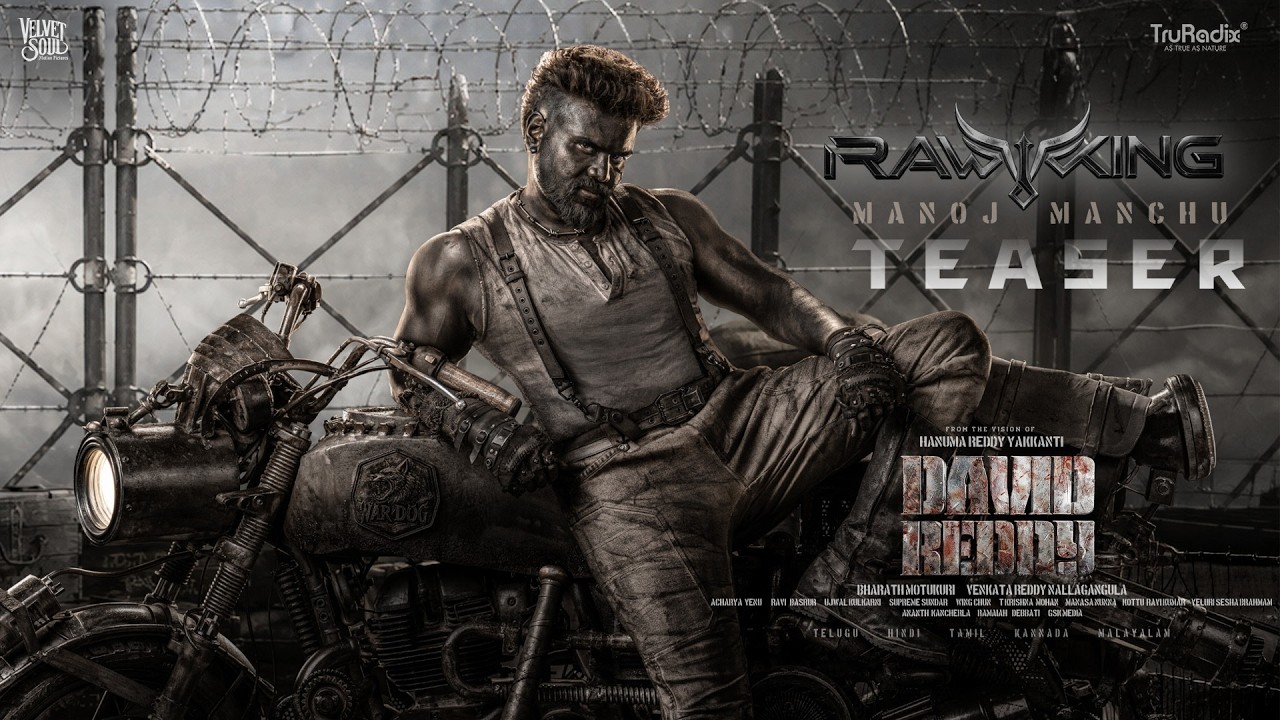
Manchu Manoj is in that tricky phase — a talented star searching for that one career-defining blockbuster. David Reddy feels like his all-in bet. After a string of mixed results, he’s going full beast-mode here, and honestly? The teaser visuals gave me chills.
Character-Driven Plot Outline
Set between 1897 and 1922, David Reddy follows a man who transforms from an oppressed commoner into a feared rebel warrior called “Rakshas Reddy” (Devil Reddy).
The British and their local collaborators burn his world down. He responds with brutal, unflinching violence. This isn’t a Gandhi-style freedom story.
This is about a man who believes the only language oppressors understand is fear.
Maria Ryaboshapka plays his emotional anchor — the woman who sees the man behind the monster. Her arc shifts from terror to reluctant respect to tragic loss. By the climax, David either achieves symbolic victory or falls as a martyr whose legend outlives him.
Cast & Crew
| Role | Name |
|---|---|
| Lead Actor | Manchu Manoj |
| Female Lead | Maria Ryaboshapka |
| Key Supporter | Ramya Krishnan |
| Mentor Figure | Samuthirakani |
| Authority Role | Abhay Deol |
| Veteran Presence | Kanchana |
| Director | Hanuma Reddy Yakkanti |
| Music | Ravi Basrur |
| Cinematography | Aacharya Venu |
| Action Director | Supreme Sundar |
Lead Performance Breakdown
Manchu Manoj throws everything into this role. His eyes carry a hollow rage that feels authentic — not the usual hero anger, but a broken man’s desperation. The dialogue delivery is guttural, almost animalistic in fight scenes and surprisingly tender in quieter moments with Maria.

The “Rakshas Reddy” transformation scene is whistle-worthy. Watch how his posture changes. He stops walking like a man and starts stalking like something feral. That’s career-best attention to body language.
Supporting Cast & Antagonist Impact
Ramya Krishnan brings gravitas as the matriarch who represents the old-world morality David rejects. Her scenes with Manoj crackle with emotional tension — she’s the conscience he tries to ignore.
Samuthirakani plays the ideological counterpoint — a freedom fighter who believes in non-violence. His presence forces the film into interesting moral territory. Is David’s brutality justified, or is he becoming the monster he fights?
Abhay Deol as the British-aligned elite is a scene-stealer. He plays authority with cold precision — no over-the-top villainy, just calculated cruelty that feels dangerously real.
Chemistry Check
Manoj and Maria Ryaboshapka share an unusual but compelling chemistry. She doesn’t play the typical “soften the hero” role. Instead, she challenges him. Their romance is built on friction, not sweetness. The climax scene where she confronts his violence is genuinely heartbreaking.
Acting Scorecard
| Actor / Role | Rating & Comment |
|---|---|
| Manchu Manoj (David) | 8.5/10 – Career-best physicality, raw emotion |
| Maria Ryaboshapka (Lead) | 7.5/10 – Strong presence, holds her own |
| Ramya Krishnan (Matriarch) | 8/10 – Elevates every scene she’s in |
| Samuthirakani (Mentor) | 7.5/10 – Solid moral anchor |
| Abhay Deol (Antagonist) | 8/10 – Cold, calculated, unforgettable |
Emotional High Points
Three scenes stand out. First, the silent sequence when David returns to his burned village — no dialogues, just Manoj’s face crumbling. Second, the confrontation with Ramya Krishnan where she slaps him and he doesn’t react.
Pure acting gold. Third, the final battle where Maria’s character makes a choice that redefines David’s entire mission.

Ravi Basrur’s score during these moments is not background noise — it’s a character. The “Speed of David Reddy” track builds into something almost operatic during the climax.
3 FAQs – Performance Focus
Is this Manchu Manoj’s best performance ever?
Absolutely. He’s never committed this fully to physical transformation and emotional vulnerability. Even his weakest films didn’t prepare us for this level of intensity.
Does Maria Ryaboshapka hold her own against the heavyweights?
Yes, and that’s surprising. For a Ukrainian actress stepping into a Telugu period drama, she delivers a performance that feels organic, not dubbed or forced.
Is the violence justified by the performances?
Mostly. The actors sell the trauma behind the brutality. But watch out — some scenes might feel excessive if you’re expecting a conventional mass movie. This is darker than Pushpa or KGF in tone.
Technical Specs – VFX & Sound Breakdown
Aacharya Venu’s cinematography is a masterclass in period lighting. Deep shadows, amber torchlight, and saturated reds during battle sequences create an oppressive colonial atmosphere. The IMAX framing is intentional — chase scenes feel claustrophobic and explosive.
Ravi Basrur’s sound design is dense. Gunfire carries weight. Crowd murmurs build into roars. The mix by Yedhu KC ensures dialogue stays clear even during the loudest action beats. Dolby Atmos theaters will give you an immersive battlefield experience.
VFX is mostly practical — Supreme Sundar’s Wing Chun-inspired choreography keeps fights grounded. Digital enhancements are limited to crowd multiplication and matte-painted backgrounds. No glossy CGI here — the grit feels real.

Box Office & Business Outlook
Slotted for Dussehra 2026, David Reddy targets mass audiences but carries niche historical weight. The pan-Indian release strategy (Telugu, Hindi, Tamil, Kannada, Malayalam) spreads risk.
Early trade reports suggest a moderate opening, but word-of-mouth will decide its fate. If family audiences accept the violent tone, it could run for weeks.
If not, it’ll be a cult hit at best.
Pros & Cons – Final Verdict
Pros: Manchu Manoj’s career-best transformation, Ravi Basrur’s thunderous score, strong supporting cast, genuine period atmosphere, bold thematic choice of violent rebellion.
Cons: Over-reliance on brutality may alienate family audiences, first-time director’s pacing issues in the second half, limited emotional depth for side characters, one released song suggests music may not be a highlight.
Ratings are purely my take after multiple watches — your experience might differ!