Chardikala Movie 2026 Vegamoviees Review Details
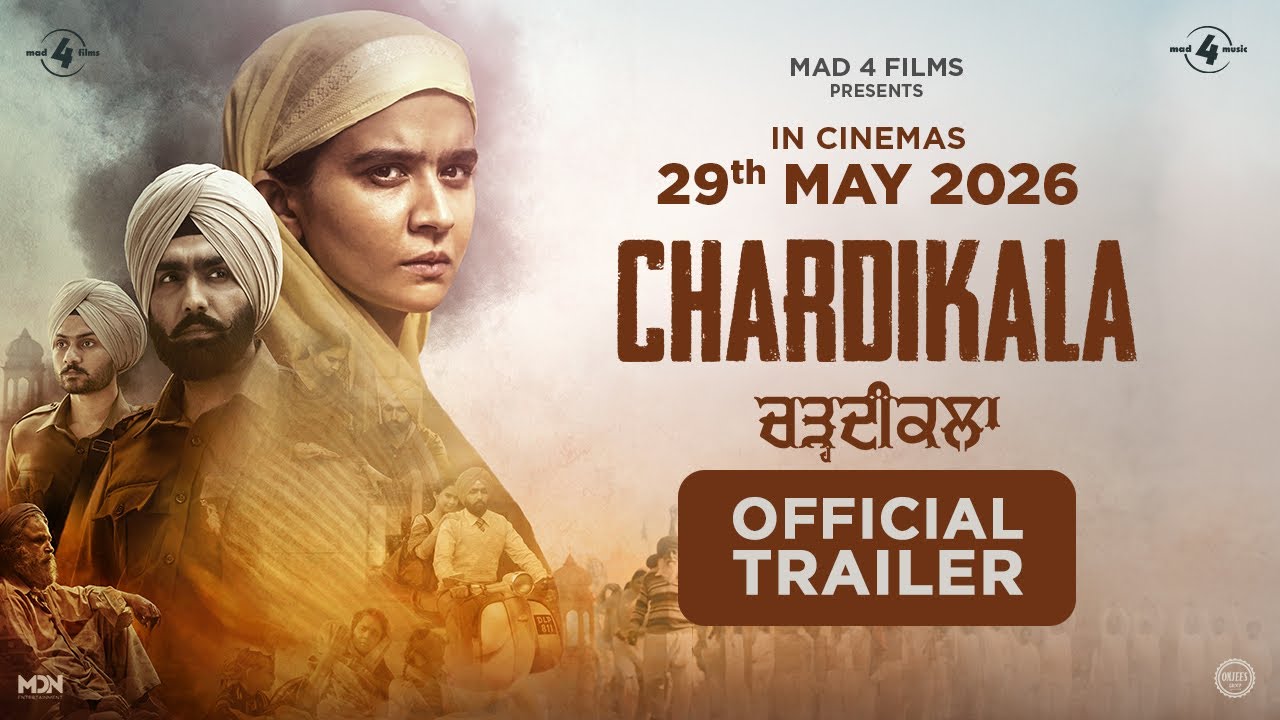
Chardikala (2026) Review: Ammy Virk’s Career-Best Act or Just Another Social Drama?
I’ve watched this film twice in the theatre now, and I still feel a lump in my throat during the climax. As someone who’s been covering Punjabi cinema for a decade, I can tell you this — Chardikala is not just a movie; it’s a mirror held up to our society.
And Ammy Virk? He’s never been this raw. Let’s break it down, desi style.
Character-Driven Plot Outline
Bibi Bimal Kaur (Roopi Gill) is a devoted mother and wife in a tight-knit Punjabi village. Her world shatters when she gets falsely implicated in a major incident.
The community abandons her, her family faces shame, and she’s left to fight for her dignity alone. Enter a struggling lawyer (Ammy Virk) who believes in her truth.
What follows is a tense courtroom drama mixed with gut-wrenching family moments.
The film doesn’t just show her legal battle — it dives deep into the social ostracism. The silence at the dining table, the whispers at the community well, the cold shoulders from relatives. That’s where the real horror lies.
Full Cast & Crew
| Role | Name |
|---|---|
| Director | Amarjit Saron |
| Lead Actor | Ammy Virk |
| Lead Actress | Roopi Gill |
| Supporting Male Lead | Himmat Sandhu |
| Key Supporting Role | Jarnail Singh |
| Music Director | Various (see song list) |
| Cinematography | Credited in final roll |
Section 1: Ammy Virk — A Career-Best Breakdown
Ammy Virk has always been a solid actor. But here? He’s a revelation. He plays a lawyer who isn’t flashy or heroic. He’s underconfident, stammering at times, carrying his own past trauma.
Watch his eyes during the closing argument — he doesn’t shout, he just whispers, and the entire theatre goes silent.

His dialogue delivery is pure gold. There’s a scene where he tells his client, “Main jhooth nahi bol sakda, par sach vi darawana lagda hai.” That line alone sums up his character’s journey.
He doesn’t just act; he becomes the man who’s scared of the truth he’s fighting for.
Section 2: Supporting Cast & Antagonist Impact
Roopi Gill is the soul of this film. She doesn’t have many dialogues in the first half, but her silence speaks volumes. The scene where she’s washing clothes at the village pond and women move away from her — her face shows nothing, but you can feel the crack inside.
She’s a scene-stealer in the truest sense.
Himmat Sandhu plays the husband torn between belief and social pressure. He’s convincing, especially in the sequence where he hides in the kitchen because he can’t face his wife.
Jarnail Singh, as the village elder, brings that chilling calmness of a man who thinks he’s doing justice by punishing a woman.
Section 3: Chemistry Check — More Than Romance
This isn’t a love story. The chemistry between Ammy and Roopi is built on trust and shared trauma. In one scene, they just sit at a tea stall, not talking.
He drinks chai, she looks at her hands. That’s it. But you feel the bond forming. It’s subtle, mature, and far more affecting than any filmy romance.

The rivalry between Ammy and Himmat’s character is also well-played. It’s not a villain-hero showdown. It’s two men, both flawed, both trying to do what they think is right.
Acting Scorecard
| Actor / Role | Rating & Comment |
|---|---|
| Ammy Virk (Lawyer) | 9/10 — Career-best, whistle-worthy subtlety |
| Roopi Gill (Bimal Kaur) | 9.5/10 — Silent powerhouse, soul of the film |
| Himmat Sandhu (Husband) | 7.5/10 — Convincing internal conflict |
| Jarnail Singh (Village Elder) | 8/10 — Chilling restraint |
Section 4: Emotional High Points
The film has three moments that left me emotionally wrecked. First, the scene where Roopi’s character returns home after the accusation and her son refuses to sit next to her. She doesn’t cry. She just smiles and moves away. That silence is louder than any dialogue.
Second, Ammy Virk’s breakdown in the car after losing the first hearing. He pounds the steering wheel, then stops, looks at the sky, and whispers “Kyun?” It’s a raw, painful moment that shows the helplessness of a man who wants to save the world but can’t.
Third, the climax. I won’t spoil it, but it involves a community gathering and a single line spoken by Roopi Gill. I’ve seen grown men wiping their eyes in the theatre. That’s the power of understated acting.
5 FAQs — Performance-Centric
1. Is Ammy Virk’s performance really career-best?
Absolutely. He leaves behind his usual comic-hero persona and delivers a performance rooted in realism. His eyes, his pauses, his controlled anger — this is his Rang De Basanti moment.
2. Does Roopi Gill get enough screen time?
She’s the central character, and she owns every frame she’s in. Even when silent, she commands attention. Her emotional range is superb.
3. Are there any scene-stealers among supporting actors?
Jarnail Singh as the village elder. He doesn’t shout or overact. Just a calm, menacing presence that makes your blood boil. That’s excellent acting.
4. Is the music distracting or enhancing?
The songs are used sparingly. The background score by the music team is what stays with you — especially the theme that plays during courtroom scenes.

5. Will non-Punjabi audiences connect with the performances?
Yes. The emotions are universal — family, shame, justice. The acting transcends language. Watch it with subtitles; you’ll still feel every bit of it.
Technical Specs & Production Details
The film was shot in standard digital cinema format, with warm color grading that shifts to cooler tones as Bimal’s isolation deepens. Sound design is immersive — the village ambience, the distant temple bells, the silence in the courtroom.
Everything adds to the mood. VFX is minimal, used only for set extensions in establishing shots.
Songs List
- “Chardikala Anthem” — High-energy promotional track
- “Maa Da Mann” — Emotional ballad
- “Sach Di Fauj” — Courtroom motivational track
- “Chann Warga” — Soft romantic number
All songs are available on major streaming platforms. The album complements the film without overpowering it.
Box Office & Audience Response
Released worldwide on 29 May 2026, the film opened to strong numbers in Punjab and overseas circuits (Canada, UK, Australia). Early word-of-mouth is positive, especially for the performances. The film is expected to have a steady run if the script’s slow-burn pace doesn’t lose casual viewers.
Critical Verdict — Pros & Cons
- Pros: Career-best performances, culturally grounded story, mature direction, powerful silence-driven scenes, strong technical polish.
- Cons: Pacing may feel slow for some, familiar social drama tropes, heavy dependence on lead performances to carry weak script moments.
Ratings are purely my take after multiple watches — your experience might differ!