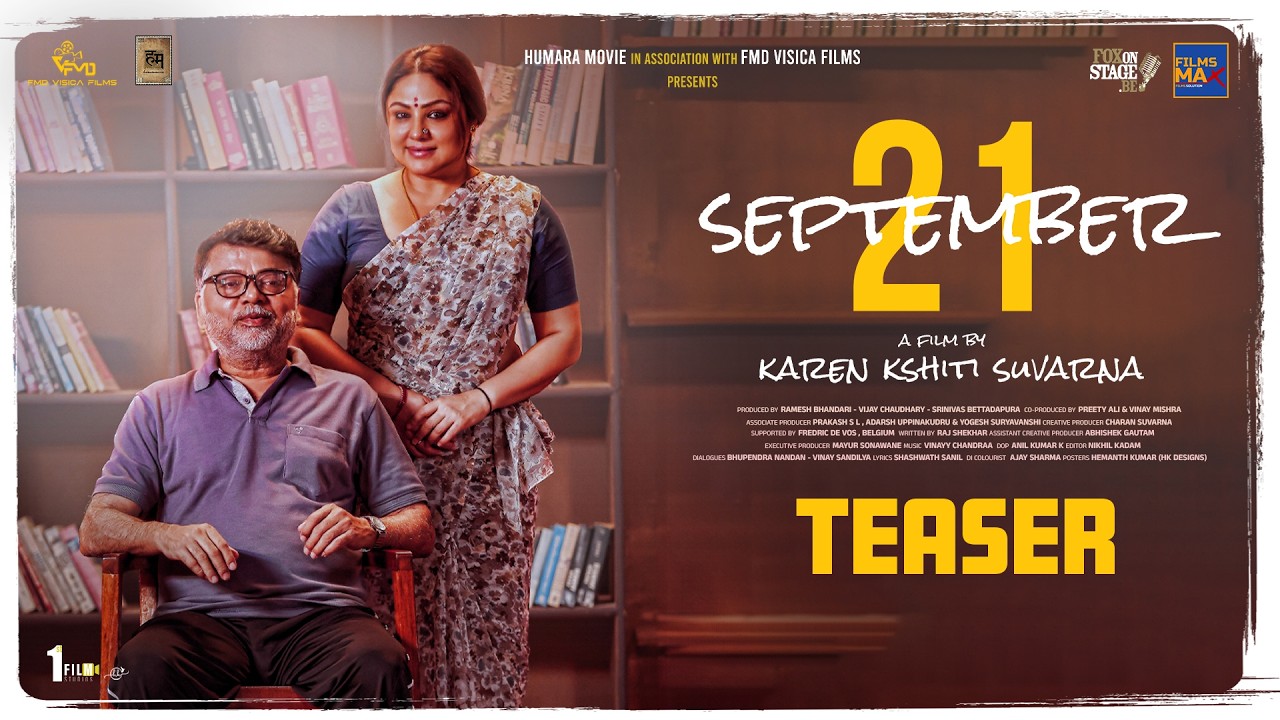
September 21 Movie 2026 Vegamoviees Review Details
September 21 (2026) Review – Is This The Most Heartbreaking Performance of The Year?
Let’s be real, friends. In an era of whistling heroes and dancing stars, it takes guts to make a quiet film about memory fading away. And that’s exactly what debutant Karen Kshiti Suvarna and her lead, Pravin Singh Sisodia, have done.
This isn’t just a film; it’s a masterclass in subtle, career-best acting that stays with you long after the credits roll.
A Story Written in Forgotten Moments
The plot of ‘September 21’ is deceptively simple, yet emotionally vast. It maps the slow, painful erosion of a mind to Alzheimer’s, seen through the eyes of the patient and his crumbling family.
This isn’t about grand plot twists, but about the devastating weight of a forgotten name, the confusion in a once-familiar room, and the silent, weary love of those who pick up the pieces every single day.
| Role | Name |
|---|---|
| Director | Karen Kshiti Suvarna |
| Story (Original) | Raj Shekhar |
| Alzheimer’s Patient | Pravin Singh Sisodia |
| Key Caregiver | Priyanka Upendra |
| Supporting Cast | Zarina Wahab |
| Supporting Cast | Amit Behl |
| Music & BGM | Vinayy Chandraa |
| Cinematography | Anil Kumar K |
Section 1: Lead Performance Breakdown – The Silence Speaks Volumes
Pravin Singh Sisodia doesn’t ‘act’ Alzheimer’s; he embodies its terrifying confusion. Watch his eyes. In one scene, they hold the sharp clarity of recognition; in the very next, they cloud over with a vacant, child-like fear.

His dialogue delivery is fragmented—not by poor writing, but by the disease itself. Sentences trail off, words get stuck, and the frustration of a mind betraying its owner is palpable.
This is a performance built on micro-expressions, not monologues.
Section 2: Supporting Cast & The Invisible Antagonist
While the disease is the true villain, the supporting cast makes us feel its impact. Priyanka Upendra is the film’s weary, beating heart. You see the love, the exhaustion, and the suppressed grief in every resigned smile.
Zarina Wahab adds layers of generational tension and quiet strength. They don’t steal scenes; they build the emotional world where the lead’s tragedy unfolds, making their performances just as critical.
Section 3: Chemistry Check – The Bonds That Fray
The chemistry here isn’t romantic; it’s familial and fraying. The most powerful dynamic is between Sisodia and Upendra. It’s a heartbreaking dance of dependence and despair.
One moment, he might cling to her like a lifeline; the next, he might look at her as a stranger. This unpredictable push-pull creates a tension more gripping than any typical movie rivalry.

It’s love, stretched thin by an unrelenting reality.
| Actor / Role | Rating & Comment |
|---|---|
| Pravin Singh Sisodia (Patient) | 5/5 – A landmark, career-defining act of immense restraint and power. |
| Priyanka Upendra (Caregiver) | 4.5/5 – The emotional anchor. Her silent burnout is devastatingly real. |
| Zarina Wahab (Family) | 4/5 – A scene-stealer in her own right, adding depth and generational weight. |
| Ensemble Cast | 4/5 – Perfectly pitched, never overshadowing the central tragedy. |
| Karen Kshiti Suvarna (Director) | 4.5/5 – A shockingly mature debut. She trusts silence and her actors. |
Section 4: Emotional High Points – Scenes That Shatter You
This film is built on quiet, devastating moments. There’s a scene where the character, in a moment of lucidity, fully comprehends his condition. Sisodia’s face doesn’t crumple into tears; it just goes still with a horrifying, accepting sadness. It’s more powerful than any scream.
Another is a simple meal-time sequence. The repeated question, asked for the tenth time, and the caregiver’s (Upendra) reaction—a mix of infinite patience and a flicker of utter despair—is a masterclass in portraying the daily grind of grief.
Your Performance-Centric FAQs Answered
Q: Is Pravin Singh Sisodia’s performance really award-worthy?
A: Absolutely. In a year of loud, commercial acts, this is a benchmark for internalized, character-driven performance. It should be in every ‘Best Actor’ conversation.
Q: Does the film get too depressing or slow?

A: It’s a deliberate, slow-burn character study, not a fast-paced drama. The pacing mirrors the disease’s progression. It’s emotionally heavy, but never manipulative. The subtle score and cinematography add beauty to the pain.
Q: Who is the real scene-stealer besides the lead?
A: While Priyanka Upendra is phenomenal, watch out for Zarina Wahab. In limited screen time, she delivers a powerhouse of unspoken history and resilience that elevates every scene she’s in.
Ratings are purely my take after multiple watches — your experience might differ!