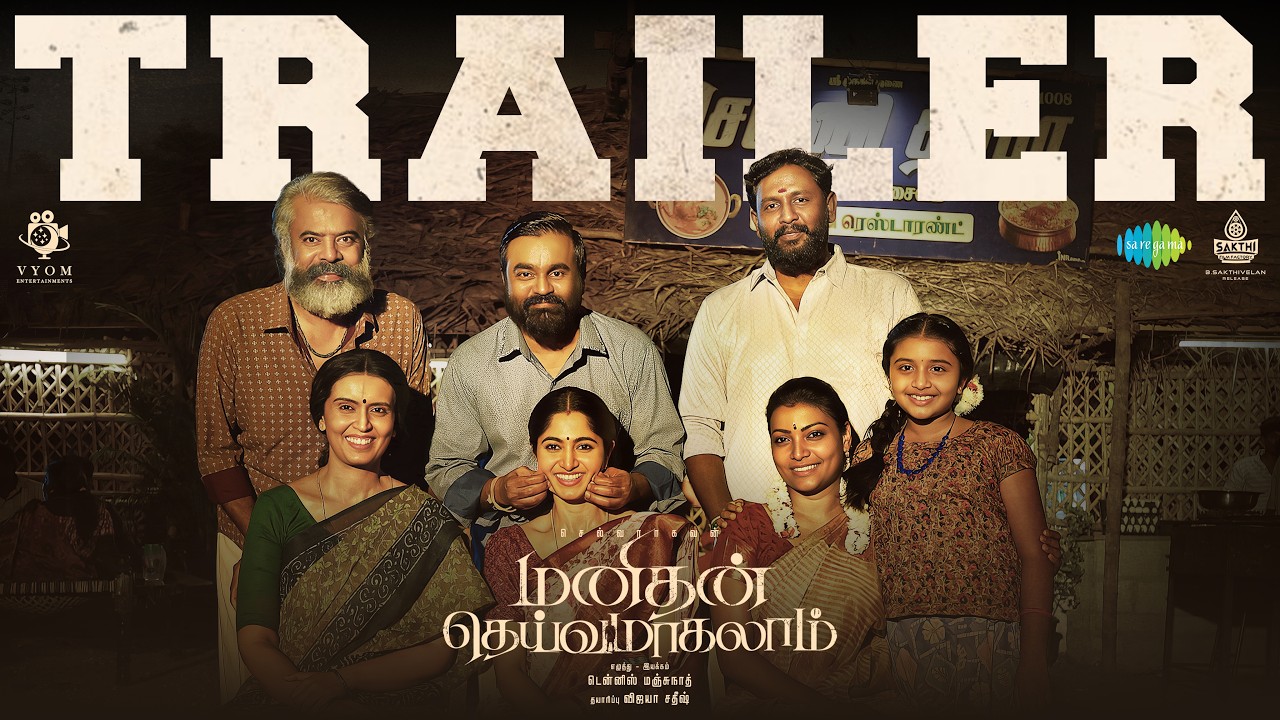
Manithan Deivamangalam Tamil Movie 2026 Vegamoviees Review Details
Manithan Deivamangalam (2026) Review – Is This Selvaraghavan’s Career-Best, Raw Performance?
Let’s be real, friends. When an actor known for intense roles steps into a rural drama, you expect fire. But does K. Selvaraghavan deliver a career-best act or get lost in the village dust? After a couple of watches, my chai-time analysis is ready.
A Simple Man, A Divine Rage: The Emotional Core
The plot isn’t about twists. It’s about erosion. We meet a gentle nongu seller, a man whose world is his loving wife and his small village. Financial desperation forces him to borrow from a smiling shark.
What follows is a slow, painful unravelling of dignity, leading to a primal, whistle-worthy transformation from ‘Manithan’ to ‘Deivamangalam’. The story lives in his eyes, not in the events.
| Role | Name |
|---|---|
| Director & Writer | Dennis Manjunath |
| Lead Actor | K. Selvaraghavan |
| Female Lead | Kushee Ravi |
| Antagonist | Mime Gopi |
| Music Director | A.K. Prriyan |
| Cinematographer | K. Ravi Varma |
| Producer | Vijaya Sathish, R.S. Sathish |
Section 1: Lead Performance Breakdown – The Anatomy of a Transformation
Selvaraghavan’s performance is a masterclass in controlled simmering. In the first half, his dialogue delivery is soft, almost hesitant, perfectly capturing the vulnerability of a good man in a hard world.
Watch his body language—shoulders slightly slumped, a smile that doesn’t quite reach his worried eyes.

The real magic is in the second half. The transformation isn’t sudden. It’s a volcano erupting in slow motion. His expressions shift from helpless pain to cold, terrifying resolve.
The dialogue delivery becomes guttural, each word weighted with a lifetime of suppressed rage. This isn’t just acting; it’s embodiment.
Section 2: Supporting Cast & The Antagonist’s Chilling Impact
Kushee Ravi is the film’s emotional anchor. Despite language challenges, her eyes speak volumes. The fear, the love, the silent suffering—she delivers a performance that grounds the hero’s journey in real stakes. She’s not just a wife; she’s the ‘why’ behind his rage.
Mime Gopi as the loan shark is a scene-stealer of the worst kind. He doesn’t snarl. He smiles. His menace is in his calm manipulation, making his vile actions feel even more terrifying. He represents a systemic evil, and Gopi plays it with unsettling realism.
Section 3: Chemistry Check – Love, Trust, and Shared Trauma
The romance isn’t about songs alone (though “Thangarathinamey” is beautiful). The chemistry between Selvaraghavan and Kushee Ravi is built on silent understanding and shared burdens.
You believe their life. This makes the violation of their peace hit so much harder. Their chemistry isn’t fiery; it’s foundational, which is why its destruction fuels the entire third act.

The rivalry, however, is where the film finds its brutal pulse. The dynamic between the protagonist and the antagonist is a classic predator-prey game that flips. The shift in power is written on their faces, not just in the action.
| Actor / Role | Rating & Comment |
|---|---|
| K. Selvaraghavan (The Protector) | 9/10 – A raw, career-highlight performance. The transition from fragility to fury is award-worthy. |
| Kushee Ravi (The Wife) | 8/10 – An emotionally potent performance. Her silent scenes are powerfully loud. |
| Mime Gopi (The Loan Shark) | 8.5/10 – Chillingly effective. A villain you hate for the right reasons, played with vile charm. |
| Young Girl (Lirthika) | 7/10 – Provides the crucial emotional hook. Her scenes with Selva are pure and heart-tugging. |
Section 4: Emotional High Points – Scenes That Leave a Mark
The film’s power is in specific, wrenching moments. The assault sequence is handled with a tense, dreadful silence that’s more impactful than any graphic violence. The sound design here—the absence of music, the stark foley—is a character in itself.
The true emotional high point, however, is the protagonist’s breakdown just before his transformation. It’s not a loud cry, but a shattering implosion.
Selvaraghavan conveys a man whose soul has been scraped raw. This scene is the pivot. From here, the gentle man is gone, and the protector is born in a blaze of devastating, cathartic rage.
Another whistle-worthy moment is the final confrontation. It’s less about choreography and more about symbolic justice. The rage feels earned, the violence feels like a release for the audience as much as for the character.
Performance-Centric FAQs
1. Is Selvaraghavan’s performance better than his previous intense roles?
It’s different. While past roles relied on overt intensity, here he masters subtlety before the explosion. The vulnerability he shows makes the eventual rage more profound. For emotional depth and range, this is arguably his most complete performance.

2. Does the supporting cast hold up against the lead’s powerful act?
Absolutely. Kushee Ravi matches him in emotional gravity in their shared scenes. Mime Gopi provides the perfect, hateful counterpoint. The film works because the performances around Selvaraghavan are strong enough to make his world feel real and worth fighting for.
3. Is the melodrama a distraction from the core performances?
For some, yes. The first half has moments that feel stretched. But these quieter, sometimes melodramatic moments are what build the character’s emotional ledger.
They are the foundation for the performance pay-off in the second half. You need to see the weight he carries to cheer for how he drops it.
Ratings are purely my take after multiple watches — your experience might differ!