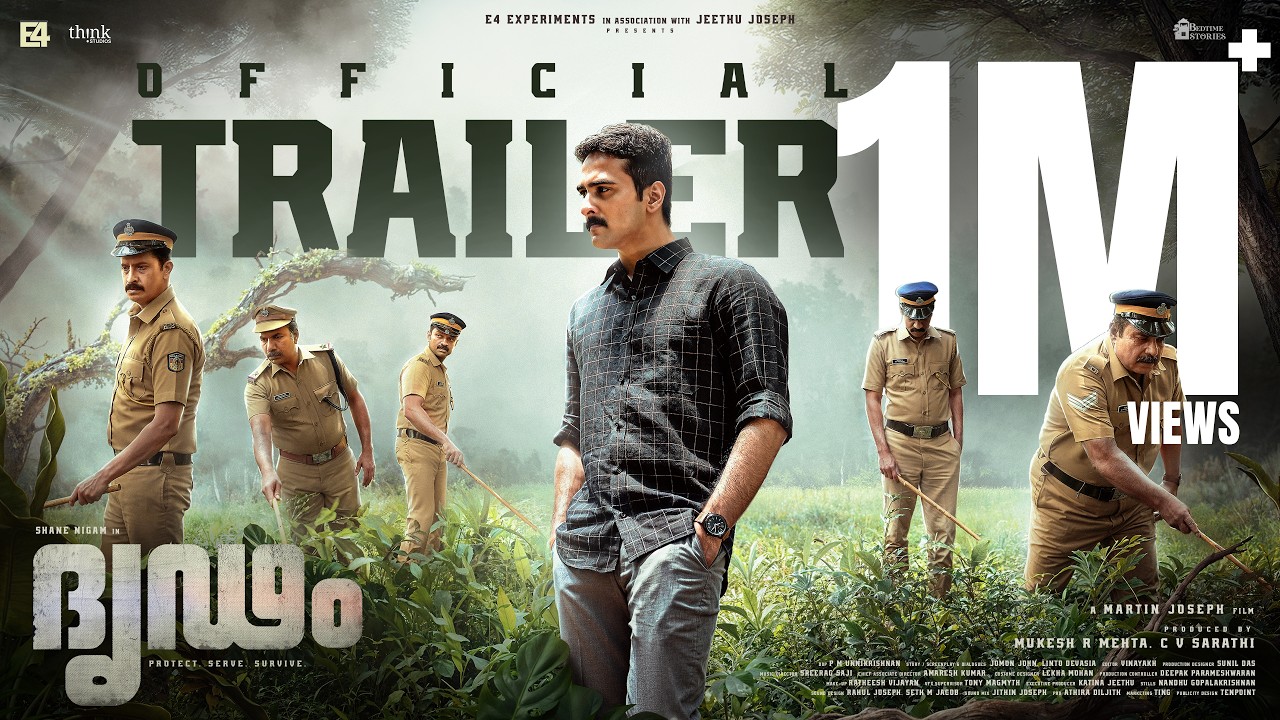
Dridam Shane Nigam Movie 2026 Vegamoviees Review Details
Dridam (2026) Review – Shane Nigam’s Gritty Cop Drama That Hits Hard But Stumbles at the Finish Line
My first watch of Dridam left me sitting in silence for a good five minutes after the credits rolled. Not because I was moved — but because I was trying to process whether that climax actually worked or completely derailed an otherwise solid film.
Shane Nigam, fresh off some career-defining roles, steps into the khaki uniform here with a quiet intensity that reminds you why he’s one of the most promising actors in Malayalam cinema today.
But does the film itself match his commitment? Let’s break it down — character by character, scene by scene.
Star Power Hook – Shane Nigam in His “Grown-Up” Era
If you’ve followed Shane from Kumbalangi Nights to Ishq and Bheeshma Parvam, you know he’s never been one to coast on looks or swagger.
Dridam places him in a more mature, restrained zone — playing SI Vijay Radhakrishnan, a newly posted police officer in a sleepy hill-town.
This isn’t your mass-market hero entry with slow-motion walks and background beats. This is Shane operating on subtlety, micro-expressions, and the kind of tired eyes that tell you he’s carrying the weight of a script that demands patience.
Character-Driven Plot Outline – More Emotion Than Investigation
Vijay arrives at the Kuzhinilam police station expecting a quiet posting. Instead, he walks into a community shaken by three murders and a finance company robbery.
The film doesn’t rush into chase sequences or interrogation theatrics. Instead, it spends time building the station as a second home — shared meals, casual banter, a senior ASI who treats him like a son.

The crimes slowly unravel through conversations, not explosions. It’s a slow-burn procedural that leans heavily on atmosphere. But here’s the catch — the final act takes a sharp turn into shock-value territory, and not everyone will forgive the detour.
| Role | Name |
|---|---|
| Director | Martin Joseph |
| Lead Actor | Shane Nigam (SI Vijay Radhakrishnan) |
| Writers | Linto Devasia, Jomon John |
| Cinematography | P. M. Unnikrishnan |
| Editor | V. S. Vinayak |
| Sound Design | Subair CP, Jithin Joseph, Manoj Kumar |
| Supporting Cast | Shobi Thilakan, Mathew Varghese, Kottayam Ramesh, Saniya Fathima |
| Producers | Mukesh R. Mehta, C.V. Sarathi |
| Presenter | Jeethu Joseph |
Section 1: Lead Performance Breakdown – Shane Nigam’s Career-Best Act?
Shane doesn’t deliver one of those “look at me acting” performances. He is quietly seismic in Dridam. His Vijay is a man who listens more than he speaks — and Shane makes those silences count.
Watch his eyes during the station-room scenes: there’s a constant calculation happening, a weighing of words and people. His dialogue delivery is deliberately paced, almost minimalist, which works beautifully for a character who’s still learning the ropes of policing.
The emotional breakdown in the climax (without spoiling) is raw — not theatrical, but uncomfortable in the way real grief looks. Is this his career-best?
Very close. It’s definitely his most restrained.
Section 2: Supporting Cast & Antagonist Impact – Who Elevated the Film?
Shobi Thilakan as ASI Krishnan is the film’s emotional anchor. He plays the father figure with warmth that doesn’t tip into sentimentality. Their shared meals and quiet conversations give the film its heart.
Mathew Varghese brings a certain gravitas to his limited screen time. But where Dridam slightly fumbles is in its antagonist — the person behind the crimes feels underwritten.
When the big reveal happens, you realize the buildup promised more complexity than the payoff delivers. Kottayam Ramesh and Saniya Fathima do well in their respective roles, but the script doesn’t give them enough meat to become scene-stealers in the true sense.

Section 3: Chemistry Check – Rivalry Over Romance
There’s no romantic subplot here, and that’s a smart choice. The real chemistry is between Vijay and his station colleagues — specifically the tension with a senior officer who doesn’t trust his methods.
That professional rivalry is where the sparks fly. Shane and Shobi Thilakan share a bond that feels lived-in, like they’ve known each other for years.
The station banter, the unspoken respect, the occasional clash of egos — these dynamics keep the film grounded even when the plot stretches credibility.
| Actor / Role | Rating / Comment |
|---|---|
| Shane Nigam (SI Vijay) | ★★★★½ — Restrained, powerful, career-defining silence |
| Shobi Thilakan (ASI Krishnan) | ★★★★ — Warm anchor, father-figure energy |
| Mathew Varghese | ★★★½ — Solid but underutilized |
| Saniya Fathima | ★★★ — Competent, limited scope |
| Kottayam Ramesh | ★★★ — Reliable in a small role |
| Antagonist (final reveal) | ★★ — Undercooked, twist feels forced |
Section 4: Emotional High Points – Silence Speaks Louder
The film’s best scene doesn’t involve a single gunshot or chase. It’s a late-night conversation between Vijay and Krishnan on the station veranda, where the older man shares a regret from his own career.
Shane’s reaction — a slight nod, a pause, then a look away — says everything about his character’s growing maturity. Another standout: the moment Vijay realizes he’s been chasing the wrong lead.
The camera stays on his face for a full thirty seconds. No music. No dialogue. Just silence and failure. That’s the kind of filmmaking Dridam does best.
3 FAQs – Performance-Centric Questions
1. Is Shane Nigam’s performance in Dridam better than his work in Kumbalangi Nights?
It’s different. In Kumbalangi, he played a raw, impulsive character. Here, he’s restrained and observational. If you value subtlety over volume, this might be his more impressive act. But his Kumbalangi performance had a wider emotional range.
2. Does the supporting cast get enough screen time to shine?
Shobi Thilakan does. Others like Mathew Varghese and Saniya Fathima have moments but don’t get full arcs. The film is very much Shane’s show — the rest serve the plot more than their own characters.

3. Is the climax performance-driven or plot-driven?
The climax relies heavily on Shane’s ability to sell a twist that feels implausible on paper. He gives it his all, but even his best efforts can’t fully rescue a reveal that many will find far-fetched. It’s a performance that deserved a better-written payoff.
Box Office & Technical Specs – Quick Snapshot
Dridam released on May 8, 2026, and collected approximately ₹2.32 crore worldwide in its first week (some trackers report ₹3.7 crore by day six).
The film’s sound design by Subair CP and Jithin Joseph is top-notch — ambient rural sounds, echoing station corridors, and precise foley work by Manoj Kumar create an immersive audio experience.
Cinematography by P. M. Unnikrishnan uses natural light and composed frames to capture the hill-town’s texture. VFX is minimal, limited to subtle compositing — consistent with the grounded tone.
Songs List – Score-Driven, Not Song-Heavy
Dridam doesn’t rely on commercial tracks. No promotional single release has been widely reported. The film uses a sparse background score focused on mood and tension — think low hums, ambient drones, and percussion that mirrors heartbeat rhythms.
If you’re looking for a song list, this film likely won’t have one in the traditional sense. The music serves the silence, not the dance floor.
Critical Review – Pros & Cons
Pros:
- Shane Nigam delivers a powerhouse restrained performance — easily one of his most mature acts.
- Sound design and cinematography create a rich, lived-in world.
- Station camaraderie feels authentic and emotionally warm.
- Slow-burn structure rewards patient viewers who love character work.
Cons:
- Divisive climax — the twist feels like it belongs in a different, more sensational film.
- Pacing drags in the middle section; some scenes over-explain obvious details.
- Supporting characters like the antagonist are underwritten, undercutting the emotional payoff.
- Box office was modest — not a crowd-pleaser, which limits its commercial reach.
Ratings are purely my take after multiple watches — your experience might differ!