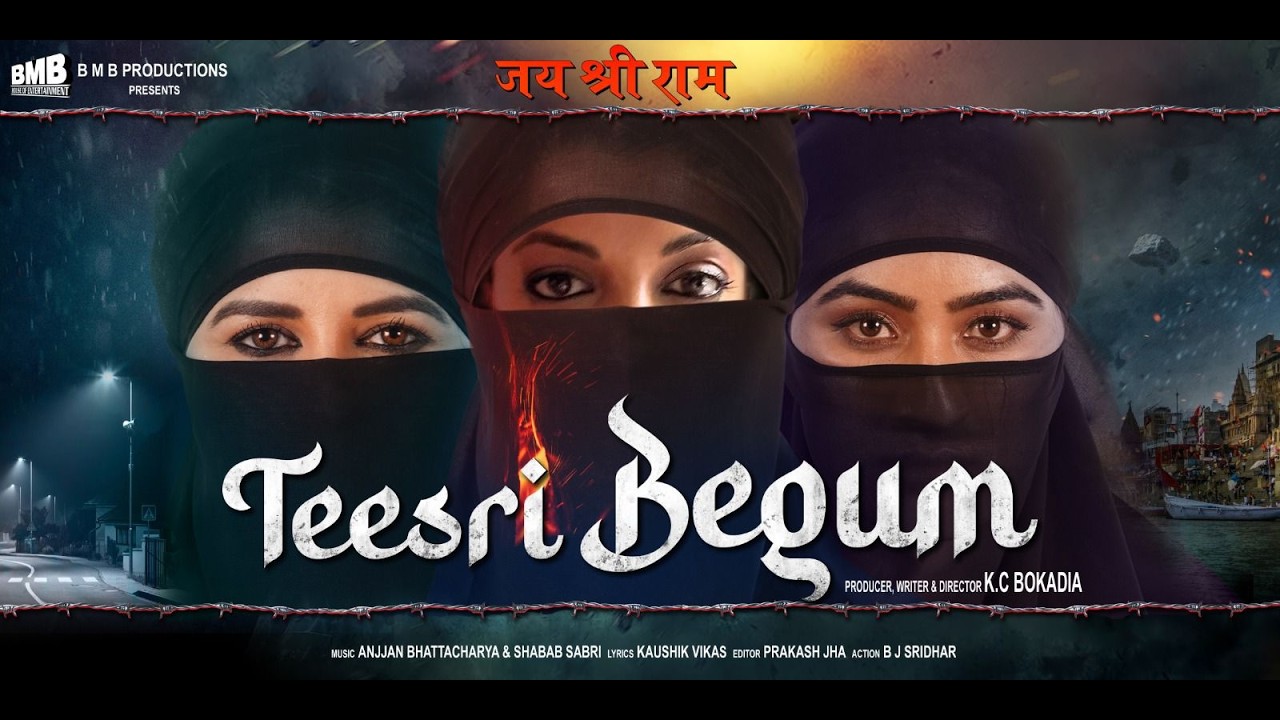
Teesri Begum Movie 2026 Vegamoviees Review Details
Teesri Begum 2026 Review – A Bold Social Drama That Hits Hard but Doesn’t Quite Land the Punch?
Before we dive into the nitty-gritty of Teesri Begum, let me tell you this: I walked into this film expecting a heavy, preachy social lecture.
But K.C. Bokadia’s latest offering is something else entirely. It’s messy, it’s raw, and sometimes it stumbles over its own ambitions. Yet, there’s a beating heart beneath all that melodrama that refuses to be ignored.
Character-Driven Plot Outline – The Emotional Arc of a Broken Soul
Pooja Dixit (Kainaat Arora) is young, trusting, and hopelessly in love. Babban Khan presents himself as the perfect suitor—charming, modern, and deeply interested in her.
But the fairytale dissolves the moment their nikah is done. Her name changes to Nagma, and the door to her old life slams shut. The reality is far darker: Babban already has two wives at home.
Pooja is now his third wife—the teesri begum.
What follows isn’t just a story about polygamy. It’s about identity erasure. It’s about a young woman forced to watch her own reflection disappear into a stranger’s face.
Her father, a respected school principal, dies of a heart attack from the sheer shame and helplessness. That scene alone is worth the ticket price—not because it’s entertaining, but because it’s uncomfortably real.
Pooja’s journey from innocence to despair, then from despair to quiet rebellion, forms the spine of this emotional drama.
| Role | Name |
|---|---|
| Director & Writer | K.C. Bokadia |
| Lead Actress – Pooja/Nagma | Kainaat Arora |
| Second Wife – Tabassum/Neetu | Mugdha Godse |
| First Wife – Shabana | Supriya Karnik |
| Elder Family Figure | Zarina Wahab |
| Music Composers | Aanjan Bhattacharya, Shabab Sabri |
| Production Banner | BMB Productions |
Lead Performance Breakdown – Kainaat Arora Delivers a Career-Best Act
Let’s talk about Kainaat Arora. I’ve seen her in lighter roles before, but this is something else entirely. She doesn’t just act—she inhabits the pain.
Her eyes carry the weight of a woman who has been erased. Watch her in the scene where Babban tells her to wear a burqa for the first time. There’s no dramatic dialogue, no over-the-top crying.

Just a slow, sinking realization spreading across her face. That’s the kind of acting that stays with you hours after the credits roll.
Her dialogue delivery is raw, almost uncomfortably so. She sounds like a real woman breaking down, not a trained actor performing sorrow. The scenes with her father (played by an unnamed actor, but impactful nonetheless) are gut-wrenching.
She manages to make you feel every single ounce of her humiliation without once making the character seem weak. That’s a fine line, and she walks it beautifully.
Supporting Cast & Antagonist Impact – Who Elevated the Film?
Mugdha Godse as Tabassum is, honestly, the film’s MVP for me. She plays Neetu Singh—a Rajput woman who was once lured into this same polygamous trap years ago.
She’s not bitter; she’s broken in a way that’s numb and resigned. But when she looks at Pooja, you see the flicker of a woman who remembers what hope felt like.
Her decision to help Pooja escape isn’t heroic in a loud, Bollywood way. It’s quiet, dangerous, and deeply moving.
Supriya Karnik as the first wife, Shabana, brings a layered performance. She’s complicit, yes, but she’s also a victim of years of conditioning. You don’t like her—but you don’t hate her either.
Zarina Wahab, as always, adds gravitas. Her presence in a few key scenes elevates the emotional weight of the household.
Asrar Khan as the antagonist Babban? He’s chilling precisely because he’s so ordinary. He doesn’t look like a monster. He looks like anyone’s neighbor. That’s the terrifying part.
Chemistry Check – The Real Bond is Between the Wives, Not the Couple
This film doesn’t romanticize the husband-wife dynamic, and thank God for that. The real chemistry here is between the three women—Pooja, Tabassum, and Shabana.

There’s no rivalry for Babban’s affection. Instead, there’s a slow-burning sisterhood born from shared trauma. The scene where Tabassum silently holds Pooja’s hand while she cries?
No words needed. That one gesture speaks louder than any romantic subplot ever could.
| Actor/Role | Rating & Comment |
|---|---|
| Kainaat Arora (Pooja) | Career-best – Raw, vulnerable, unforgettable |
| Mugdha Godse (Tabassum) | Scene-stealer – Quietly powerful, deeply empathetic |
| Supriya Karnik (Shabana) | Solid – Adds necessary moral complexity |
| Asrar Khan (Babban) | Effective – Ordinary evil personified |
| Zarina Wahab (Elder) | Gravitas personified in limited screen time |
Emotional High Points – Scenes That Leave a Mark
The father’s heart attack scene is the film’s emotional epicenter. When Deena Nath collapses after hearing about his daughter’s forced conversion, the silence that follows is deafening.
No background music. No dramatic close-ups. Just the sound of a family breaking apart. It’s a masterclass in what not to say.
Another standout moment is when Tabassum cuts Pooja’s hair—a symbolic act of defiance against the identity Babban imposed on her. It’s not a violent scene.
It’s gentle, almost sacred. Two women helping each other reclaim their names, one strand at a time. Whistle-worthy? Not in the traditional sense. But it’s the kind of scene that makes you want to stand up and applaud silently.
3 FAQs – Performance-Centric Questions Answered
Q: Is Kainaat Arora’s performance in Teesri Begum genuinely award-worthy?
A: Absolutely. She brings a lived-in vulnerability that’s rare in mainstream Hindi cinema.
Her breakdown scenes feel authentic, not rehearsed. If there’s any justice in award circuits, she’ll at least be in the conversation.
Q: Does Mugdha Godse’s role have enough screen time to make an impact?
A: Yes—and she uses every second wisely. Her character’s arc is shorter than Kainaat’s, but she leaves a lasting impression.
Watch for her eyes in the final escape sequence; they tell a whole story without a single word.

Q: Which supporting actor surprised you the most?
A: Supriya Karnik, hands down. Her role could have been a one-note victim or villain, but she adds shades of gray. You end up feeling sorry for her even when she’s being complicit. That’s good acting.
Final Verdict – A Flawed but Necessary Film
Teesri Begum isn’t perfect. Its pacing drags in the middle, the dialogues occasionally get preachy, and the limited release hurt its reach.
But when it works—and it does work in several crucial scenes—it reminds you why socially relevant cinema still matters. Kainaat Arora delivers a career-best act.
The bond between the three wives is the real love story here. And the uncomfortable questions it raises about identity, faith, and consent will linger long after the screen goes dark.
Is it for everyone? No. It’s heavy, depressing, and unapologetically serious. But if you’re in the mood for a film that values emotional truth over commercial masala, give it a watch.
Ratings are purely my take after multiple watches — your experience might differ!