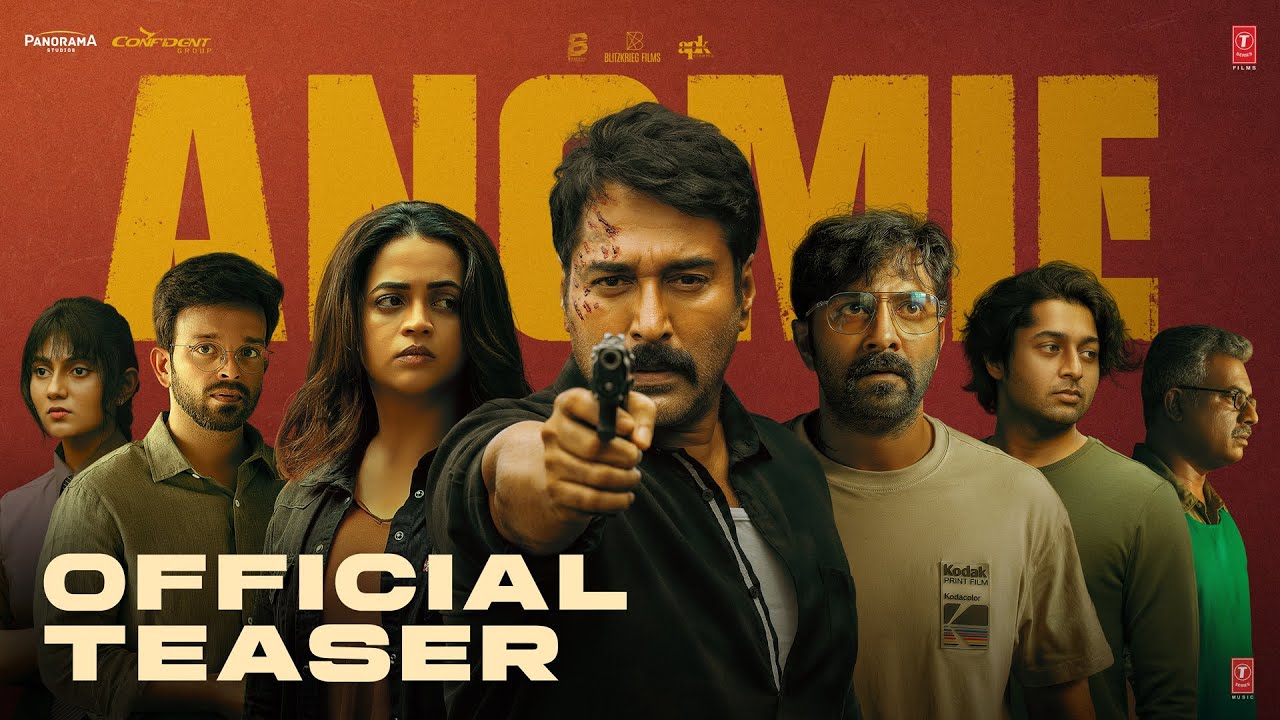
Anomie Movie 2026 Vegamoviees Review Details
Anomie (2026) Review – Is This Shebin Benson’s Career-Best, Whistle-Worthy Act?

Watching Shebin Benson evolve from the brooding intensity of ‘Rorschach’ to the raw, vulnerable fury in ‘Anomie’ feels like witnessing a star truly arrive.
Check showtimes, seat availability, and exclusive offers for the latest movies near you.

As a critic who’s tracked Mollywood’s thriller pulse from Surat to Kochi, this film isn’t just a story—it’s a seismic performance showcase wrapped in technical brilliance.
The Heart of the Hunt: A Sister’s Oath
‘Anomie’ is, at its core, an emotional earthquake. Zaara (Drishya Raghunath) isn’t just investigating a crime; she’s excavating her own soul after her brother (Shebin Benson) vanishes.
The plot is a tightly wound coil of personal grief colliding with a society’s moral collapse. Every clue she uncovers feels like a piece of her own heart turning to stone.
| Role | Name |
|---|---|
| Director & Writer | Riyas Marath |
| Zaara | Drishya Raghunath |
| Brother | Shebin Benson |
| Key Supporting / Producer | Bhavana |
| Antagonist | Rahman |
| Music Director | Harshavardhan Rameshwar |
| Cinematographer | Sujith Sarang |
| Action Choreographer | Thavasi Raj |
Section 1: Lead Performance Breakdown – The Anatomy of Rage
Shebin Benson delivers a masterclass in controlled chaos. His early scenes are all quiet, brotherly warmth—a gentle smile, relaxed shoulders. When the storm hits, his transformation is physical.
The eyes, wide with trauma, slowly harden into flint. His dialogue delivery shifts from soft-spoken to guttural, each word feeling torn from his throat.

Drishya Raghunath as Zaara is the film’s relentless engine. She carries the plot’s weight not with superhero swagger, but with a terrifying, single-minded focus.
Watch her in interrogation scenes—the stillness in her posture contradicts the hurricane in her eyes. It’s a star-making turn that announces a major new force in Malayalam cinema.
Section 2: Supporting Cast & Antagonist Impact – The Pillars of Pressure
Bhavana, in her dual role as producer and performer, brings a haunting, enigmatic gravity. Is she a guide or a gatekeeper? Her presence adds layers of moral ambiguity that deepen the film’s central theme.
Rahman, as the antagonist, is a powerhouse of quiet menace. He doesn’t need to shout; his calm authority in a boardroom is more frightening than any loud threat.
Binu Pappu and Vishnu Agasthya provide crucial texture. Pappu, as a slippery informant, brings moments of dark humour, while Agasthya’s weary cop represents a broken system. They aren’t just fillers; they are the living, breathing ecosystem of the ‘anomie’ the film critiques.
Section 3: Chemistry Check – The Bonds That Break and Bind
The sibling chemistry between Shebin and Drishya is the film’s emotional bedrock. Their flashback scenes aren’t sugary; they feel real, lived-in. This makes the separation agonizing. Their shared screen time in the latter half is electric—a complex dance of recognition, rage, and shattered love.
The rivalry between Zaara and Rahman’s character is a cold war of intellects. It’s less about physical clashes and more about strategic moves on a chessboard of corruption. This intellectual tension elevates the film beyond a mere action revenge saga.

| Actor / Role | Rating & Comment |
|---|---|
| Shebin Benson (Brother) | 9/10 – A career-redefining act. His silent breakdown scenes are award-worthy. |
| Drishya Raghunath (Zaara) | 9.5/10 – The ultimate scene-stealer. Carries the film’s soul on her shoulders with fierce conviction. |
| Bhavana (Key Role) | 8/10 – Nuanced and compelling. Adds profound depth to the narrative’s moral maze. |
| Rahman (Antagonist) | 8.5/10 – A masterclass in understated villainy. His calm is more terrifying than any rage. |
| Binu Pappu (Informant) | 7.5/10 – Provides perfect tonal shifts. A vital pinch of realism and dark humour. |
Section 4: Emotional High Points – Scenes That Leave Scars
1. The Vanishing: The moment Shebin’s character disappears is handled with chilling silence. No dramatic music, just the empty space where a person used to be. Drishya’s reaction—a slow-motion shattering of her world—is heartbreaking.
2. The Evidence Wall: Zaara, alone in a room, surrounded by photos and strings. It’s a visual of her obsession, and Drishya’s face shows the exact cost of that obsession—her humanity being replaced by a machine of vengeance.
3. The Rain-Soaked Reckoning: The climax confrontation. It’s not just a fight; it’s a cathartic release of two siblings’ collective pain. Shebin’s expression here, a mix of recognition and horror, is acting of the highest order.
4. The Final Frame: No spoilers, but the last shot of the film lingers. It’s a powerful, wordless commentary on justice and cost, leaving you in a state of reflective silence long after the credits roll.
Performance-Centric FAQs
Q: Is Shebin Benson’s performance in ‘Anomie’ better than his act in ‘Rorschach’?
A: It’s a different beast. ‘Rorschach’ was about internalized grief and mystery. ‘Anomie’ demands a raw, external eruption of pain and transformation. It showcases a wider emotional range, making it arguably his most complete and powerful performance to date.
Q: Does Drishya Raghunath get enough scope beyond just being the “seeker sister”?

A: Absolutely. Zaara is the film’s protagonist and its moral centre. Drishya isn’t just reacting; she’s driving the entire narrative. The film deconstructs her psyche, making her journey from a loving sister to a force of nature the core plot. It’s a lead role, period.
Q: How does the supporting cast, especially Bhavana, impact the lead performances?
A: They create the world that the leads must survive in. Bhavana’s enigmatic character acts as a mirror, reflecting Zaara’s potential futures.
Rahman’s imposing calm forces Shebin’s character to find strength he didn’t know he had. The leads shine brighter because the supporting cast provides such a formidable, high-stakes environment.
Ratings are purely my take after multiple watches — your experience might differ!