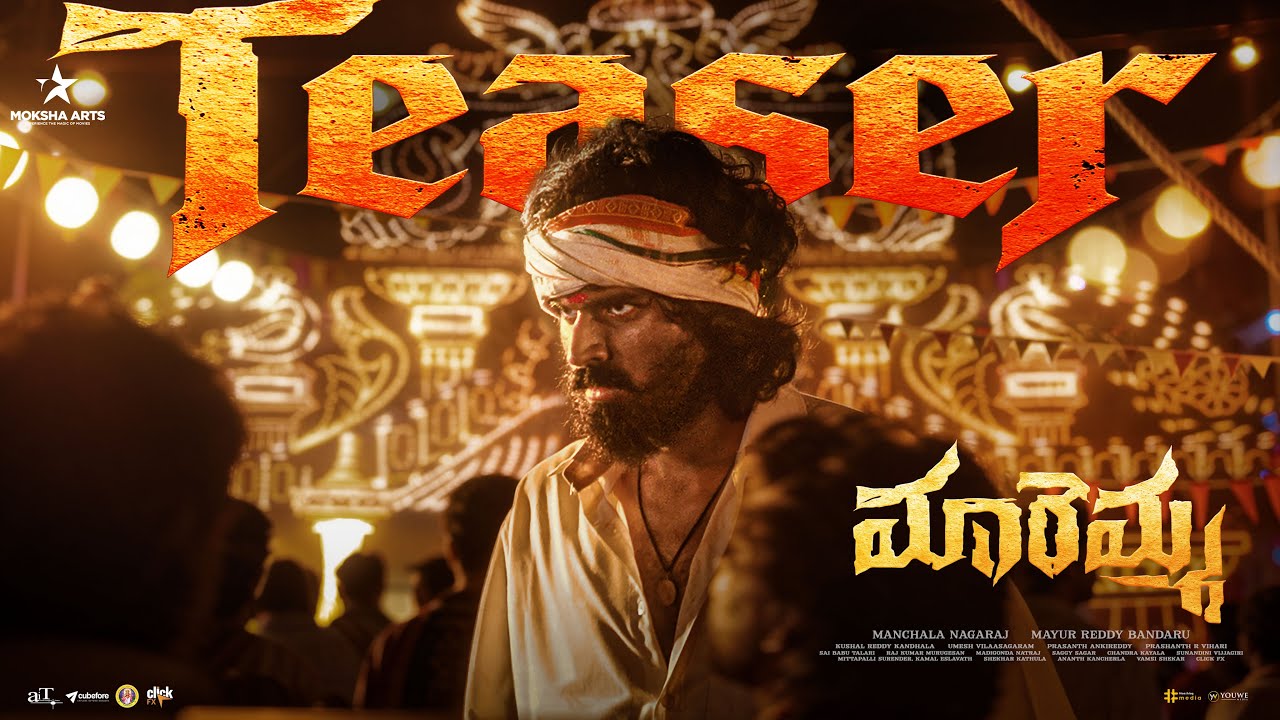
Maremma Movie 2026 Vegamoviees Review Details
Maremma 2026 Review – Is Maadhav Bhupathiraju The Next Big Rural Mass Hero?
Watching a star kid’s debut is like checking a new restaurant’s signature dish—you hope for a grand feast, not just familiar flavors. With Maremma, Maadhav Bhupathiraju isn’t just serving a dish; he’s setting the entire village fire, and the heat is seriously impressive.
This isn’t a polished, city-boy launch. It’s a raw, dusty plunge into the heart of faction country. Director Manchala Nagaraj throws his debutant into the deep end of Rayalaseema’s violent politics, and the boy doesn’t just swim—he fights the current with a terrifying, believable rage.
The Guts of the Story: More Than Just Revenge
At its core, Maremma is about a young man (Maadhav) consumed by a blood feud. A family massacre, a stolen legacy, and a love (Deepa Balu) that represents the peace he can’t afford to choose.
But the script cleverly wraps this revenge arc around the concept of entrapment—like the ‘net’ in the teasers, every character is caught in a web of honor, land, and past sins.
The emotional journey isn’t linear rage. It’s the quiet torment before the storm, the conflicted glances at his lover, and the volcanic eruption when a final boundary is crossed. This focus on the internal conflict, not just the external fights, is what gives the film its weight.
| Role | Name |
|---|---|
| Director & Writer | Manchala Nagaraj |
| Lead Actor | Maadhav Bhupathiraju |
| Lead Actress | Deepa Balu |
| Main Antagonist | Vikas Vasishta |
| Music Director | Prashanth R. Vihari |
| Cinematographer | Prasanth Ankireddy |
| Producer | Mayur Reddy Bandaru |
| Art Director | Rajkumar Murugesan |
Section 1: The Maadhav Breakdown – A Debut That Demands Attention
Let’s address the elephant in the room: the pressure of a legacy debut. Maadhav doesn’t try to mimic anyone. He builds his performance from the ground up—with his body.
The physical transformation is not for glamour; it’s for function. You see the coiled-spring tension in his shoulders, the grounded stance of a man used to hard earth.

His dialogue delivery is a masterclass in controlled aggression. He doesn’t scream every line. The threat is often in the whisper, the promise of violence in a low growl.
But when he does erupt, it’s with a guttural force that shakes the scene. His eyes are the real scene-stealers—they hold a history of pain that makes his vengeance feel earned, not just cinematic.
Section 2: The Pillars Around Him – Who Holds Their Ground?
Vikas Vasishta as the antagonist is a perfect foil. He brings a cold, calculating menace that contrasts Maadhav’s hot-blooded fury. You believe his hold over the village is through fear and cunning, not just muscle.
This isn’t a one-note villain; you see the greed and paranoia in his calmest moments.
Deepa Balu has the tough job of being the emotional anchor in a storm of testosterone. She excels in silent reactions—her face mirrors the audience’s dread and hope.
Veteran Vinod Kumar (Dharmanna) adds immense gravitas in limited screen time, his presence lending the family conflict its tragic weight. V.S. Rupa Lakshmi, as a scheming family elder, is a revelation, proving that the most dangerous weapons in a faction war are often words, not weapons.
Section 3: Chemistry Check – Fire & Fragility
The romance between Maadhav and Deepa Balu is the film’s fragile heartbeat. Their chemistry isn’t built on grand songs alone (though “Deepa Deepa” is beautiful). It’s in the stolen moments of normalcy—a shared glance across a crowded yard, a hesitant touch that speaks of a world outside the feud.

This makes the stakes personal. When the conflict threatens her, it’s not just about “hero saving heroine.” It’s about him protecting the only softness left in his hardened world. Their dynamic elevates the plot from a generic revenge saga to a poignant human story.
| Actor / Role | Rating & Comment |
|---|---|
| Maadhav (Protagonist) | 8.5/10 – A career-launching act. Raw, intense, and wholly committed. |
| Vikas Vasishta (Villain) | 8/10 – A chilling, cerebral antagonist. His calm is scarier than shouts. |
| Deepa Balu (Love Interest) | 7.5/10 – Brings crucial emotional depth. Her eyes tell a parallel story. |
| V.S. Rupa Lakshmi (Family Elder) | 7.5/10 – Scene-stealer. Embodies the manipulative politics of the village. |
| Vinod Kumar (Patriarch) | 7/10 – Provides the foundational gravitas. Makes the loss feel real. |
Section 4: The Scenes That Stick – Whistle & Silence
Two sequences define this film’s emotional range. First, the pre-interval massacre. It’s not just action; it’s chaos filmed with a terrifying intimacy.
The sound design drops, focusing on heavy breathing and the sickening thud of weapons. Maadhav’s reaction shot—a silent, wide-eyed realization of total loss—is acting of the highest order.
Second, the final confrontation on the hilltop. It abandons typical hero elevations for a brutal, exhausting fist-fight. Both men are battered, breathing ragged.
It feels less like a “mass moment” and more like a tragic, inevitable end to a cycle. Prashanth Vihari’s BGM here, a mix of haunting folk vocals and aggressive percussion, is a character in itself.
Your Maremma Performance FAQs
1. Is Maadhav’s performance just hype, or a genuine star-making turn?
Genuine. He avoids debutant tropes, fully inhabiting a rugged, broken character.
It’s a performance built on physicality and internalized pain, not just star swag. He announces himself as a serious actor, not just a star kid.

2. Does the supporting cast get lost in Maadhav’s debut storm?
Not at all. Vikas Vasishta and Rupa Lakshmi carve out powerful, memorable spaces.
They provide the context and conflict that make Maadhav’s journey compelling. This is an ensemble that strengthens the lead, not just background players.
3. How does the technical team contribute to the performances?
Immensely. Prasanth Ankireddy’s cinematography paints the actors in harsh, truthful light—sweat, dirt, and all.
Prashanth Vihari’s score underlines their emotional states, and Natraj Madigonda’s visceral fight choreography makes every hit feel earned and painful, adding to the performance’s authenticity.
Ratings are purely my take after multiple watches — your experience might differ!